16 October 2026 | Evershine Team | Buyers Guide
For most of the last two decades, Vasai-Virar sat at the edge of the Mumbai Metropolitan Region, known more for its distance from the city than for any particular appeal. That perception has shifted. Improved rail connectivity, a significant gap in property prices compared to the Western Suburbs, and a growing supply of well-planned residential projects have moved Vasai-Virar from a last-resort option to a considered first choice for many homebuyers. This post covers the factors behind that shift and what buyers should know before evaluating a project here.
Where Vasai-Virar Sits in the MMR
Vasai-Virar is a municipal corporation area in Palghar district, situated north of Mumbai on the Western Railway line. It falls within the Mumbai Metropolitan Region but is administered separately from the Brihanmumbai Municipal Corporation. The area spans Vasai Road, Nala Sopara, Virar, and surrounding localities, each with its own micro-market character.
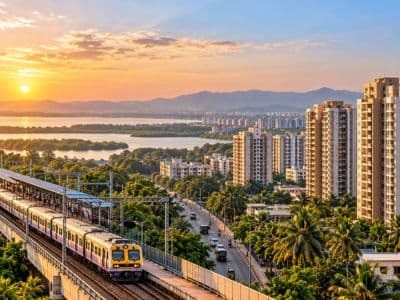
The Western Railway suburban network connects Virar directly to Churchgate, with Virar being the northern terminus of the fast local train service. Travel time to Andheri by fast local runs between 45 and 55 minutes, and to Churchgate roughly 90 minutes during non-peak hours. For buyers working in the western suburbs or Bandra-Kurla Complex, this makes Virar a realistic daily commute option.
The Price Gap That Drives the Decision
The primary reason buyers look at Vasai-Virar is the price difference relative to the Western Suburbs. A 2 BHK flat in Andheri or Kandivali currently transacts at a range that puts it out of reach for first-time buyers without substantial loan support. The same budget in Virar can get a larger unit, often in a project with more open space and better amenities.
What has changed is the quality of residential supply at lower price points. Projects in Virar today include lift access, parking, landscaped podiums, and clubhouse facilities that were not standard in affordable housing a decade ago. The gap between what you get in the city and what you get in Virar has narrowed in terms of amenities, even as the price gap remains wide.
Infrastructure That Has Changed the Calculus
Beyond the existing rail network, several developments have improved Vasai-Virar's connectivity and liveability.
Road connectivity: The Virar-Alibaug Multimodal Corridor, a planned expressway running through the MMR, is expected to improve east-west connectivity significantly once completed. Improvements to the internal road network have also reduced travel times to nearby commercial centres.
Commercial and social infrastructure: The area now has a growing base of schools, hospitals, retail chains, and commercial offices. Nala Sopara and Virar have seen investment from organised retail and healthcare providers in response to the increasing residential population, reducing the need to travel into Mumbai for everyday needs.
Metro connectivity in the pipeline: The proposed extension of the Mumbai Metro into Vasai-Virar is expected to reduce dependence on the overcrowded Western Railway suburban network. The timeline remains subject to government approvals, but the planned connectivity has already influenced buyer sentiment.
What to Check Before Buying in Vasai-Virar
1. MahaRERA registration: All projects above the statutory threshold must be registered with MahaRERA before accepting bookings. Verify the RERA number on the MahaRERA portal and review the committed possession date, approved plans, and the developer's project history before making any payment.
2. Distance from the railway station: The daily commute in Virar is heavily shaped by proximity to a station. Projects within a kilometre of Virar or Nala Sopara station command a premium for good reason. Beyond two to three kilometres, dependence on autos adds meaningfully to commute time during peak hours.
3. Developer track record: The MahaRERA portal shows completed and ongoing projects for each developer, giving an indication of delivery history. A developer with multiple completed projects and a consistent possession record represents materially lower risk than a first-time developer with a single ongoing project.
Who Is Buying in Vasai-Virar
The buyer profile has diversified in recent years. The traditional base of buyers relocating from Mira Road or moving up from rental accommodation has been joined by working professionals in their early thirties who have concluded that ownership in the Western Suburbs is not financially feasible within their current income and savings horizon.
The growth of hybrid work arrangements has also expanded the pool of buyers willing to consider a longer commute. When office attendance drops to three days a week, the trade-off between travel time and a materially larger flat tips in favour of Virar for buyers who would not have considered it under a five-day office routine. Investors make up a smaller but consistent segment, drawn by lower entry prices and steady rental demand from the working population that cannot afford to buy in the suburbs.
About Evershine Builders
Evershine Builders has been developing residential projects in the Mumbai Metropolitan Region for over six decades. In Vasai-Virar, the group's presence centres on Virar West, where Evershine offers 1 BHK and 2 BHK flats in Virar with MahaRERA registration and all statutory clearances in place. Evershine is built to the group's standard of documentation-first delivery, with the Occupancy Certificate and housing society formation handled before possession is offered to buyers. For buyers evaluating options in this micro-market, Evershine is one of the few projects here backed by a developer with a city-wide track record. To explore available projects, visit the Evershine project listings. To learn more about the Evershine group. To speak with the sales team, reach out.
Frequently Asked Questions
1. How far is Virar from Andheri and how long does the commute take?
Virar is approximately 55 kilometres from Andheri by road and rail. By fast local train, the journey takes between 45 and 55 minutes during non-peak hours. Peak-hour trains run more frequently but are considerably more crowded.
2. Are property prices in Vasai-Virar likely to appreciate?
Price appreciation depends on demand, supply, and infrastructure development. Vasai-Virar has benefited from steady demand driven by affordability and improving connectivity. Infrastructure projects such as road upgrades and the potential Metro extension are expected to support prices over the medium term, though buyers should conduct their own research and not rely on projected appreciation as the primary reason for purchase.
3. Is Vasai-Virar part of the Mumbai Municipal Corporation limits?
No. Vasai-Virar falls under the Vasai-Virar City Municipal Corporation, a separate municipal body from the BMC. It is part of the Mumbai Metropolitan Region but governed independently, with property tax and development regulations administered by the VVCMC.
4. What documents should I verify before booking a flat in Virar?
Verify the MahaRERA registration number on the MahaRERA portal before making any payment. Check the approved plans, committed possession date, and the developer's completed project history. Review the sale agreement carefully, particularly the possession date clause, payment schedule, and penalty provisions. A lawyer's review before signing is advisable regardless of the developer's reputation.

Established in 1960, Evershine Group has shaped a six-decade legacy of trust and excellence. Renowned for creating nature-inspired homes with modern amenities, we deliver more than promised, offering middle-income families an aspirational lifestyle. Our focus on quality, innovation, and customer satisfaction makes us one of Mumbai's most trusted real estate developers.
ADDRESS
215, 2nd Floor, Veena Beena Shopping Centre, Gurunanak Road, Bandra (West), Mumbai, Maharashtra 400050
© copyright reserved 2026
Privacy Policy


